


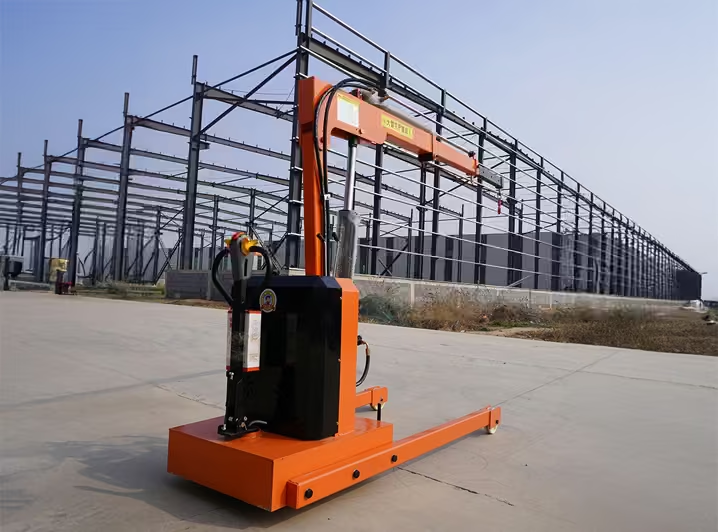


Introduction of Telescopic Shop Crane
A Telescopic Shop Crane, also know as portable rotary crane, engine hoist/Folding Engine Hoist, as the name suggests, is a light and small lifting equipment that combines mobility with electric lifting capabilities. It typically consists of a base, a column, a boom, an electric hydraulic system, wheels, and a control system. Unlike traditional fixed cranes or large-scale cranes, the most significant characteristic of this equipment is its flexibility and portability. It does not require fixed installation and can move freely on flat ground. It uses electric power to drive a hydraulic system, enabling the lifting, moving, and precise positioning of heavy objects. Advanced models feature a multi-section telescopic boom (e.g., a three-section telescopic boom) and can achieve rotational operation, combined with electric drive (walking) and remote control operation. It is designed to provide an efficient, safe, and easy-to-operate solution for various scenarios requiring the handling and hoisting of heavy materials, especially in environments with limited space or where frequent changes in work location are needed, making it ideal for shop and workshop environments.

Application of Telescopic Shop Crane
Telescopic shop cranes, due to their unique advantages, are widely used in numerous industries and fields:
- Industrial Manufacturing and Assembly:
- Production Lines: On production lines in automotive, machinery, electronics, and precision instrument industries, used for the assembly, handling, and precise positioning of components such as engines, large molds, and heavy parts. Its three-section telescopic boom and rotary function make it highly adaptable to complex working conditions within a shop environment.
- Workstation Operations: Assists workers in material handling and equipment maintenance in confined workstations or work cells.
- Mold Changeovers: Used for quick mold changeovers on machine tools, injection molding machines, and stamping presses. Electric walking and remote control significantly improve efficiency and reduce manual labor intensity within a shop.
- Warehousing and Logistics:
- Shelf Access: Works in conjunction with forklifts or other handling equipment for vertical access to goods, especially suitable for precise placement and retrieval of irregularly shaped or overweight items in warehouses adjacent to shops.
- Container Loading and Unloading: In small freight stations or warehouses, assists in loading and unloading items within containers.
- Material Handling: For short-distance material handling and stacking within warehouses and shops.
- Equipment Maintenance and Repair:
- Mechanical Maintenance: In mechanical processing, mining, construction sites, petrochemical plants, etc., used for disassembling and installing components of large equipment, such as lifting and precisely aligning engines, gearboxes, and pump bodies. Its shop-friendly size makes it ideal for internal maintenance work.
- Pipe Installation: During equipment overhaul or installation, used for precise alignment and installation of heavy components like pipes and valves, where the rotary function is particularly useful in tight spaces.
- Power Facility Maintenance: In substations or power distribution rooms in the power industry, used for lifting and moving equipment such as transformers and switchgear. Electric walking facilitates movement in confined spaces.
- Construction and Decoration:
- Small-Scale Projects: In small construction sites or interior decoration, used for lifting and precise installation of building materials such as steel structures, glass curtain walls, stone, and ventilation ducts.
- High-Altitude Work Assistance: Serves as an auxiliary lifting tool on some high-altitude work platforms, improving operational efficiency.
- R&D and Laboratories:
- Heavy Equipment Handling: In research institutes and university laboratories, used for handling and positioning heavy items such as precision instruments, large experimental equipment, and test samples. Remote control ensures fine control of valuable equipment.
- Aerospace and Military:
- Component Maintenance: In maintenance workshops for aircraft, spacecraft, and military equipment, used for precise lifting and installation of large components such as engines, wings, and cabin doors, often within dedicated shop environments.
- Other Special Applications:
- Stage Set-up: In performance venues, used for quick installation and dismantling of stage sets and props.
- Exhibition Booth Setup: For lifting and positioning exhibits at various trade shows.
- Ship Repair and Building: In the maintenance and repair of small vessels, used for lifting components such as engines and propellers.

Feature of Telescopic Shop Crane
Telescopic shop cranes possess a series of significant performance characteristics that make them excellent in specific applications:
- Electric Hydraulic Drive:
- Power Source: Typically powered by DC batteries (e.g., maintenance-free batteries), which drive a hydraulic pump via an electric motor.
- Smooth Lifting and Lowering: The hydraulic system provides smooth, precise lifting and lowering movements, avoiding the shocks and vibrations that mechanical transmissions might cause, which is beneficial for protecting both the load and the equipment itself.
- High Load Capacity: Despite their compact size, they can easily lift hundreds of kilograms or even several tons of heavy objects thanks to the powerful thrust of the hydraulic system.
- Energy-Efficient and Environmentally Friendly: Being electrically powered, they produce no exhaust emissions and low noise compared to fuel-powered equipment, aligning better with environmental requirements and making them suitable for indoor operations.
- Excellent Mobility and Flexibility:
- Electric Walking (Electric Drive): Equipped with an electrically driven walking system, allowing the user to control its movement (forward, backward, turning) freely on flat ground via a handle or remote control without strenuous pushing or pulling, significantly reducing operator fatigue.
- Compact and Agile: The overall compact design occupies minimal space, enabling it to easily maneuver through narrow passages, workshops, warehouses, or production lines.
- Easy to Transport: Some models are foldable or detachable, facilitating transportation and storage.
- Quick Deployment: No complex installation required; it’s ready to use when stopped, greatly saving preparation time for operations.
- Multi-functional Telescopic Boom Design:
- Three-section Telescopic Boom: This is a key feature of this type of crane. The boom can extend in multiple sections (e.g., three sections), meaning it can achieve greater lifting height and a longer working radius while maintaining the equipment’s compactness. This increases the coverage and flexibility of lifting operations.
- Rotary Function: The lifting arm (or the entire upper structure) can rotate to a certain angle, or even 360 degrees. This allows the crane to pick up, move, and place materials within a larger range from a fixed position without frequently moving the entire machine, greatly improving operational efficiency and convenience.
- Intelligent and Convenient Operation:
- Remote Control Operation: Advanced models are equipped with wireless remote controls, allowing operators to precisely control the crane from a safe distance, including lifting, telescoping, rotating, and walking movements. This enhances operational safety, precision, and comfort, especially crucial when working with limited visibility or in hazardous areas.
- Intuitive Controls: In addition to remote control, they typically feature simple and intuitive control panels or handles with clear buttons, allowing even novice users to quickly master operation.
- Safety Protection: Equipped with safety devices such as overload protection, emergency stop buttons, and travel limit switches, ensuring the safety of operators and equipment.
- Single-Person Operation: In most cases, one person can independently perform the equipment’s movement, positioning, and lifting operations, reducing labor costs.
- Structural Stability and Durability:
- High-Strength Materials: Main structural components are typically made of high-strength steel, ensuring the equipment’s stability and safety when carrying heavy loads.
- Heavy-Duty Chassis: A robust chassis design with a low center of gravity provides strong anti-tip capabilities, maintaining stability even under full load.
- Surface Treatment: Surfaces are usually powder-coated or painted, offering good corrosion resistance and wear resistance, extending the equipment’s service life.
- Simple Maintenance: The hydraulic system is relatively sealed, and daily maintenance primarily involves battery charging and regular hydraulic fluid checks, resulting in low maintenance costs.

Product Advantages
Compared to traditional lifting equipment, a Telescopic Shop Crane equipped with a three-section telescopic boom, rotation, remote control operation, and electric walking offers the following significant advantages:
- Extremely High Flexibility and Operational Efficiency:
- Wide Working Range: The three-section telescopic boom design allows the lifting arm to extend further, covering a larger working radius and height, greatly expanding the equipment’s range of use within a shop.
- Precise and Fast Positioning: The rotary function allows the crane to flexibly adjust the load’s position on a horizontal plane without moving the base. Combined with remote control, this achieves precise and rapid positioning of heavy objects, reducing the time spent repeatedly moving the entire machine.
- Reduced Labor and Time: The combination of electric walking and remote control operations makes equipment movement and lifting operations more efficient and labor-saving, significantly reducing the need for manual pushing/pulling and directing, thereby shortening project cycles.
- Greatly Enhanced Ease of Operation and Safety:
- Safer Remote Control: Remote operation allows the operator to stay away from hazardous areas, avoiding potential risks such as crushing or collision during close-range operation, especially crucial within busy shop floors. This significantly improves safety, particularly when lifting large or unstable loads.
- Reduced Labor Intensity: The electric walking function eliminates the physical exertion of manually pushing and pulling heavy equipment, making long-term operations more comfortable.
- Better Visibility: Operators can choose the optimal viewing angle via the remote control to better observe the lifting process and load status, improving operational precision and safety.
- Multiple Safety Protections: Comprehensive safety systems, such as overload protection, limit switches, and emergency stop buttons, combined with the instant response capability of remote control, further ensure the safety of personnel and machinery.
- Significant Economic Benefits:
- Fast Return on Investment: Although integrating more features, its highly efficient operational capability and versatility mean faster task completion and increased equipment utilization, leading to quicker return on investment.
- Lower Operating Costs: Electric walking and efficient operations reduce the need for additional auxiliary equipment and labor, lowering overall operating costs.
- Reduced Equipment Wear: Smooth electric walking and precise hydraulic control reduce equipment wear caused by impacts and improper operations, extending the service life.
- Prominent Environmental and Low Noise Advantages:
- Zero Emissions: Pure electric drive means no exhaust gas or oil emissions, making it ideal for clean workshops, laboratories, food processing plants, and other environments with strict environmental requirements.
- Ultra-Low Noise: Electric operation produces very low noise, providing a more comfortable and quiet working environment for operators and the surrounding area, helping to comply with environmental regulations.
- Wide Applicability:
- Combining telescoping, rotation, electric walking, and remote control, this crane can handle almost all complex material handling and lifting challenges, especially in situations with limited space, high precision requirements, or where frequent changes in operating posture are needed. Its “shop crane” designation specifically highlights its suitability for industrial and maintenance workshops.